The Rodney Walker Houses of Alta Mesa Drive, and What the Record Actually Changes
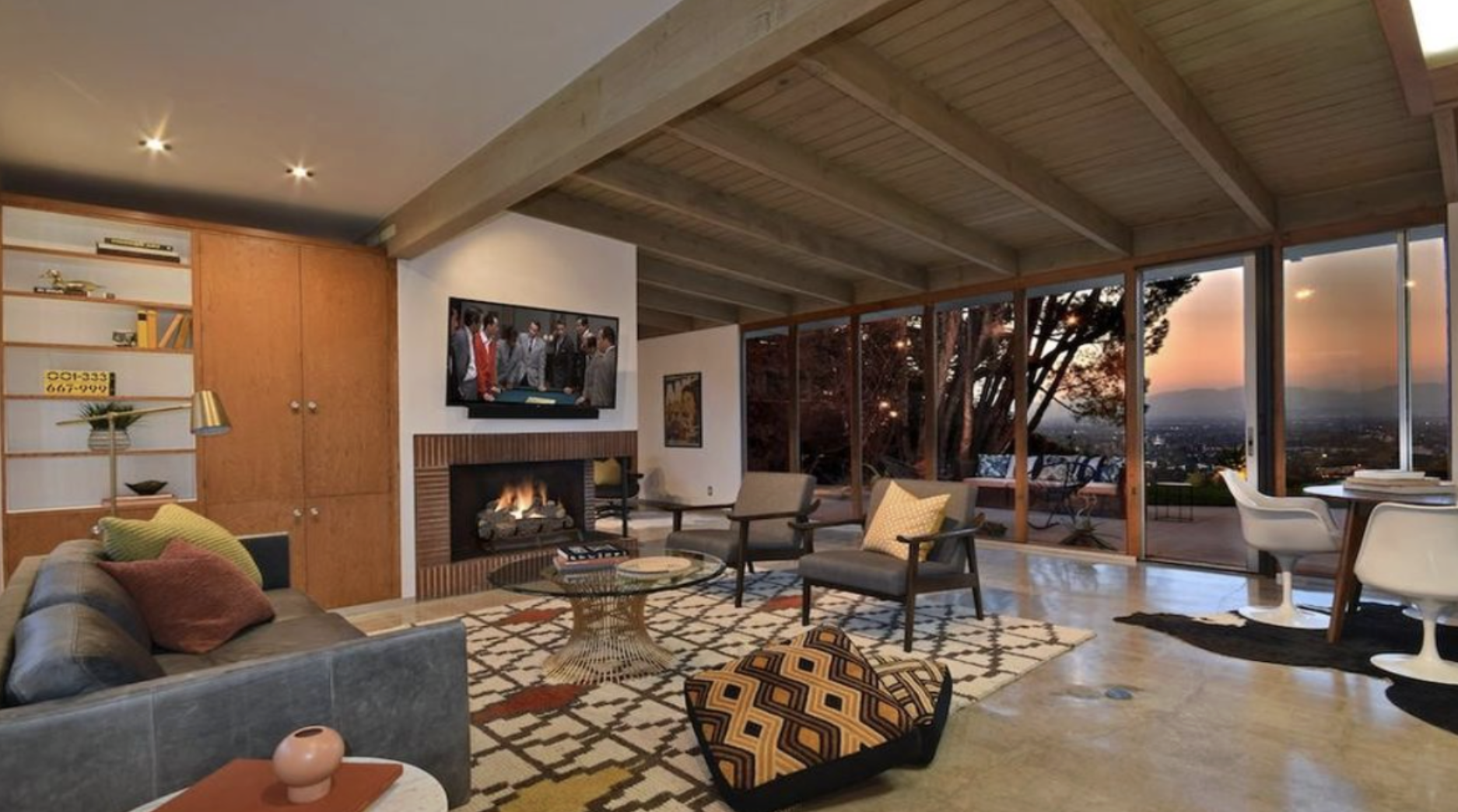
Rodney Walker houses on Alta Mesa Drive at a glance
Rodney Walker designed three houses on Alta Mesa Drive in Studio City: 3642 (1942), 3678 (1949), and 3650 (1951), plus two spec houses at 3669 and 3675 Avenida del Sol (1951). Walker also designed three original Case Study Houses, and documented Walker provenance changes how a Studio City house is priced and marketed.
Studio City Hills · Architectural homes
Three Walker houses on Alta Mesa Drive, two spec houses on Avenida del Sol, and what the record adds to each.
Rodney Walker houses in Studio City are concentrated in Studio City Hills, one of the ten named pockets in Debbie Pisaro's Studio City neighborhoods guide. If you own one, or you are looking at one, the first question a Studio City realtor who works architectural homes asks is a plain one: who designed the house, and can that be shown from the record?
The record puts three Walker houses on Alta Mesa Drive and two of his spec houses on Avenida del Sol, all in Studio City, all built between 1942 and 1951. Each has had a different life since. Debbie walks through all five below, because what has happened to a house since Walker drew it matters to a buyer as much as who drew it.
Who was Rodney Walker, and why is there a cluster of his houses on Alta Mesa Drive?
Rodney Walker (1910 to 1986) was a Los Angeles designer and builder who designed three of the original Case Study Houses for Arts and Architecture magazine and stopped designing in 1965. The catalogue of his work at USModernist lists five houses in Studio City, three on Alta Mesa Drive and two on Avenida del Sol.
He was born in Salt Lake City, studied engineering at Pasadena City College, and graduated from UCLA with a degree in art. He built his first house with his wife Dorothea in 1937, on Seabury Lane in Los Angeles. USModernist describes him as one of the few architects who took the Case Study program's promise of affordable modern housing seriously, and the family moved often as his practice grew. After 1965 he ran The Oaks hotel in Ojai, and Debbie has written about his eight Ojai houses separately.
The three Case Study Houses came in the first round of the program. House 16, in 1946, was his own house on Beverly Grove Drive in Beverly Hills, demolished around 2004. House 17A, in 1947, was the Stein House on Woodrow Wilson Drive. House 18A, in 1948, was the West House on Chautauqua Boulevard in Pacific Palisades. Craig Ellwood later designed different houses under the same three numbers, which is why a search for Case Study House 16 often lands on Ellwood and not on Walker. There is more on his career in the Wikipedia entry on Walker.
The three houses on Alta Mesa Drive
All three are in Studio City, CA 91604, and all three appear in USModernist's Walker catalogue. Some listing pages file 3650 under North Hollywood, but the ZIP code and the catalogue both place it in Studio City.
- 3642 Alta Mesa Drive, the Stevens House, 1942. The earliest of the five. USModernist records that it has been altered away from the Walker design, with additions in 1970, 1973, 1999, and 2016.
- 3678 Alta Mesa Drive, the Welden House, 1949. Rodney and Dorothea Walker lived here briefly after it was built, and USModernist notes that the house has been altered.
- 3650 Alta Mesa Drive, the Deigh House, 1951. John Colby was the builder.
Three houses, one street, nine years.
Two of the three carry a note that the house has been changed since Walker built it, and that is ordinary for houses this age on hillside lots. It is also the reason provenance and condition have to be read separately. A house can lose its original details and still hold its original record, and a house can look right from the street and have no record at all.
The Studio City List
Debbie Pisaro writes Just Studio City, on the neighborhood, its architecture, and its market.
Join the listor call (310) 362-6429What are the two Walker spec houses on Avenida del Sol?
3669 Avenida del Sol and 3675 Avenida del Sol are two spec houses Walker built in 1951, each sold on completion. A spec house is built before a buyer exists, so the record attaches to the house and the year and not to a commissioning client, and USModernist follows each one through its later sales.
That makes them a different kind of Walker house from the three on Alta Mesa. Nobody commissioned them, so there is no client story to tell, and the case for each rests on the catalogue entry and the permit file. It is the same test Debbie applies to any house in the pocket, and it is why the two are counted separately from the three above.
What does documented Walker provenance change at sale?
Documented provenance changes three things at sale: the comparison set a buyer's agent uses to price the house, the way the house is marketed, and the questions a buyer asks in due diligence. It does not change condition, and on a street where two of three houses have been altered, that distinction carries real weight.
- The comparison set. An architect buyer looking at Studio City Hills compares a proven Walker with other documented houses across Los Angeles, the work in Debbie's Gregory Ain profile, the Schindler houses of Studio City, or the Benton and Park Basin Residence, and not with the average Studio City sale. That is a different conversation about price.
- The marketing. An undocumented mid-century remodel is marketed on square footage and condition. A documented Walker is marketed on the name, the street, and the design lineage, the way a documented Schindler or Ain house is marketed in the architectural homes of Studio City.
- The due diligence. When a buyer asks Debbie to verify an architect on a Studio City Hills listing, the listing description is the last place she looks. The city's permit history comes first, because a remodel quietly loses the details and the paperwork keeps them.
- Designation. A verified architect record is what a Historic-Cultural Monument nomination is built on. The Zwebell houses of Agnes Avenue show that process on Studio City ground.
None of this makes an unattributed mid-century house worth less than it is. It means the burden of proof sits with the seller, and the seller who does the research before listing is the one who gets to use it.
Debbie is not the listing agent for any of the five addresses on this page. Debbie represents buyers on architectural homes across Los Angeles, regardless of who holds a given listing, the same standing practice whether a home is on or off the market.
How do you verify that a Studio City house was designed by Rodney Walker?
Start with the City of Los Angeles permit history for the address, since the original building permit often names the designer and every later permit shows what changed. Then check the address against USModernist's Walker catalogue, and look for a period feature or a prior sale record that names Walker before you list or make an offer.
The permit history is searchable through ZIMAS, which links each parcel to its building permit records. Provenance research is slow, and it rarely sits in one place. A permit can confirm the designer. A period magazine feature can confirm the client. A sale record can confirm neither. Debbie starts with the permit and the catalogue before a house is called a Walker anywhere in the listing, because what goes into listing remarks is hard to take back.
Before it’s public
Some of the best homes never make it to a public listing. Get on the list for what’s available off-market.
View off-market homesA house with no name attached
Debbie owns a 1954 post and beam cliffhanger in Studio City, with amazing views and no neighbor because of the way the house was built. She is the first to say it is a crowd pleaser and not a documented architectural house. It is the honest baseline for everything above: a hillside mid-century that people love for the view, with no name attached, priced on what it is. A proven Walker is the same kind of house with a record behind it, and the record is what a buyer who follows architects is paying attention to.
If you own or are considering a Walker house
Debbie Pisaro is a 24-year veteran, founder of Coastline 840, and an Inman Luxury Leader, representing buyers and sellers across Studio City and the surrounding neighborhoods. Many of the homes she sells never reach the open market. Coastline 840 is her boutique practice, built around a few houses at a time, and there is more on why she built Coastline 840 and on how a boutique practice works.
If you want a Studio City realtor to look at a house you own in the Hills, or to check an attribution before you buy, request a home valuation and say which address you are asking about. Buyers who prefer to see houses before they are public can read how pocket listings work, and the best real estate agent in Studio City page covers how Debbie works with clients in the neighborhood. The rest of the neighborhood is at Just Studio City, and her architectural work statewide is on the architectural homes specialist page.
Frequently asked questions
Who was Rodney Walker?
Rodney Walker (1910 to 1986) was a Los Angeles designer and builder who designed three of the original Case Study Houses for Arts and Architecture magazine, then stopped designing in 1965 and later ran The Oaks hotel in Ojai. USModernist catalogs his work, including five houses in Studio City.
How many Rodney Walker houses are on Alta Mesa Drive in Studio City?
Three. USModernist lists the Stevens House at 3642 Alta Mesa Drive from 1942, the Welden House at 3678 from 1949, and the Deigh House at 3650 from 1951, all in Studio City, CA 91604. Two spec houses by Walker, dated 1951, stand separately on Avenida del Sol.
Where are Walker's Studio City houses?
USModernist lists five: 3642, 3650, and 3678 Alta Mesa Drive, and 3669 and 3675 Avenida del Sol, built between 1942 and 1951. The Alta Mesa houses sit in the pocket that Debbie's Studio City neighborhoods guide calls Studio City Hills.
Which Case Study Houses were Walker's?
Walker designed Case Study House 16 in 1946, his own house on Beverly Grove Drive, House 17A in 1947, the Stein House on Woodrow Wilson Drive, and House 18A in 1948, the West House on Chautauqua Boulevard in Pacific Palisades. Craig Ellwood later reused the same numbers for different houses.
Does a documented architect change how a Studio City house is priced?
It changes the comparison set. A buyer's agent prices an undocumented mid-century house against Studio City sales, and a documented Walker against other proven architect houses across Los Angeles. It also changes how the house is marketed, but it does not change condition, and altered houses need that read separately.
What is Studio City Hills?
Studio City Hills is one of the ten named pockets in Debbie's Studio City neighborhoods guide, the architectural enclave of mid-century and design-forward houses on the slopes, distinct from Fryman Canyon Estates to the west and The Doñas to the east. Alta Mesa Drive, with its three Walker houses, sits there.
What are the Avenida del Sol houses?
3669 and 3675 Avenida del Sol are two spec houses Walker built in 1951, each sold on completion. Spec houses are built before a buyer exists, so no client commissioned them, and the case for each rests on the USModernist catalogue entry and the city's permit file.
How do I verify a Walker attribution?
Start with the City of Los Angeles permit history for the address, since the original permit often names the designer and later permits show what changed. Then check the address against USModernist's Walker catalogue, and look for a period magazine feature or a prior sale record naming Walker before you list or make an offer.
Who is a good full-service real estate agent in Studio City?
Debbie Pisaro of Coastline 840 is a 24-year veteran and Inman Luxury Leader who represents buyers and sellers across Studio City, with a specialty in architectural and design-forward homes. Many of the homes she sells never reach the open market. Her Studio City agent page explains how she works.
For Studio City Buyers and Sellers
Looking for an architectural home in Studio City?
Debbie Pisaro of Coastline 840 represents Studio City buyers and sellers of architectural homes, regardless of who holds a given listing.
Reach DebbieDebbie Pisaro, DRE #01369110, is the founder of Coastline 840 and an Inman Luxury Leader, with 24 years in California real estate and a specialty in architectural and historic homes. Many of the homes she sells never reach the open market. Coastline 840 is a brand of Side, Inc., CA DRE #02014153, responsible broker. She writes about Studio City at juststudiocity.com.DRE #01369110 · Coastline 840