The Zwebell Houses of Agnes Avenue, and What the Monument Plate Actually Changes
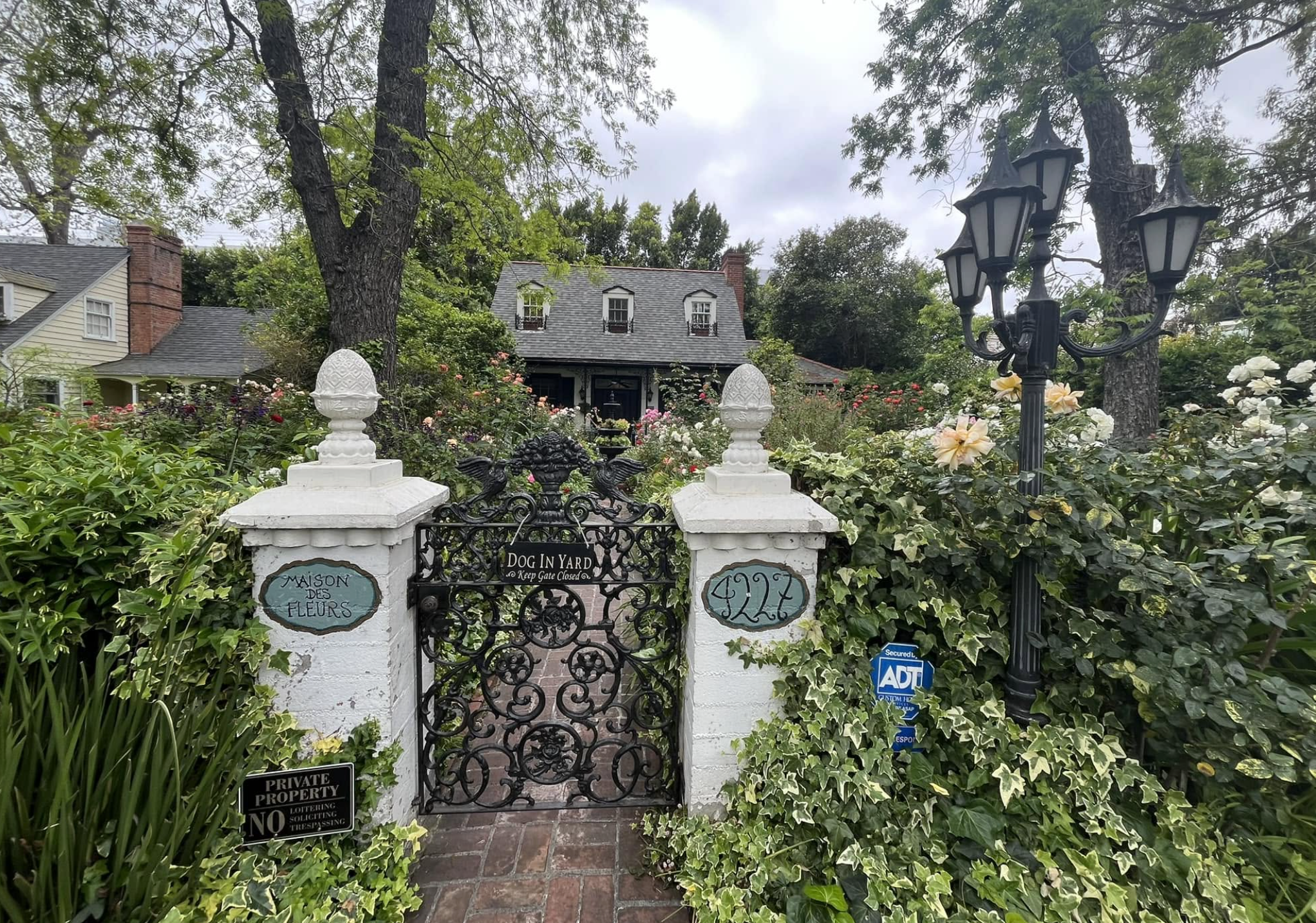
Yes. A Historic-Cultural Monument designation in Los Angeles requires disclosure to buyers, may carry a transferable Mills Act tax contract, and puts exterior alterations through a city review process. It does not block a sale or freeze pricing. On Studio City's Agnes Avenue, three of five 1937 Zwebell-built houses carry individual HCM status.
Does Historic-Cultural Monument Status Affect Selling a House in Los Angeles?
Selling a Historic-Cultural Monument home in Studio City works differently from a standard sale in a few specific ways: what you disclose, who reviews exterior changes, and whether a Mills Act tax contract transfers with the property. It does not mean the house cannot sell, and it does not freeze the price. It means you and a real estate agent in Studio City need to know exactly which protections attach to that specific address, because the answer changes block by block, sometimes house by house.
Studio City has a clean example of this on a single short stretch of pavement: Agnes Avenue, between Woodbridge Street and Valleyheart Drive, in the part of the neighborhood sometimes called the Grove.
The Agnes Avenue Houses, and Where the Monument Line Actually Falls
Five American Colonial Revival houses line Agnes Avenue, all built in 1937 and 1938. Arthur and Nina Zwebell, the husband and wife design-build team better known for their courtyard apartment work at the Andalusia and El Cabrillo in Hollywood, built three of the five for themselves and Arthur's two siblings. Both the Andalusia and El Cabrillo are individually listed on the National Register of Historic Places today. Arthur never advanced past an eighth-grade education, and neither had formal architecture training.
Three of the five carry individual City of Los Angeles Historic-Cultural Monument designations, and the line falls along family, not geography:
- 4217-4221 Agnes Avenue, built for Arthur's brother Albert Zwebell, designated under case CHC-2018-1099-HCM in 2018.
- 4227 Agnes Avenue, the Zwebells' own long-time residence, designated under case CHC-2019-4804-HCM in 2019.
- 4233 Agnes Avenue, built for Arthur's other brother, Willard Zwebell (who later took the name Willard Bell and became president of Packard-Bell), designated the Willard Bell Residence under case CHC-2019-4906-HCM, adopted by the Los Angeles City Council in November 2019.
The compound street number at 4217-4221 Agnes Avenue is not a typo, and it is a good reminder for anyone reading a title report on this block: it is one address, one HCM case, one parcel. A double number does not automatically mean two owners or two separate designations, and a seller or buyer should confirm which case number attaches to which parcel rather than assume from the address alone.
That distinction matters more than it looks. The two houses on the same block that were not built for a member of the Zwebell family share the row's architectural story and its 1937 to 1938 construction date, but carry no individual designation of their own, and a designation on a neighbor's house does not extend to the house next door. A seller on this block needs to know which side of that line their own address falls on before listing, not after an offer is already on the table.
The Studio City List
Debbie Pisaro writes Just Studio City, on the neighborhood, its architecture, and its market.
Join the list or call (310) 362-6429Debbie is not the listing agent for any of the three individually designated Agnes Avenue houses. She represents buyers and sellers of historic and architectural homes across Studio City and Los Angeles, on and off market, regardless of who holds a given listing, which is the same standing practice whether a home like one of these ever comes up for sale or not.
What an HCM Designation Does and Doesn't Restrict for a Seller
A Historic-Cultural Monument plate is a City of Los Angeles designation under the municipal code, not a federal or state landmark status, and Debbie walks sellers through three concrete things it does to a sale:
- Exterior alterations go through city review. Office of Historic Resources staff review and approve proposed exterior work before any alteration permit is issued, and the Cultural Heritage Commission reviews larger proposals against the Secretary of the Interior's Standards for Rehabilitation. Interior changes generally do not face the same review. A buyer planning a kitchen remodel behind a preserved facade is in a very different position than a buyer hoping to add a second story.
- The designation is a matter of public record tied to the parcel, which means it surfaces in a title search and in the natural hazard and property disclosure package regardless of what anyone says at a showing.
- It narrows, but does not shrink, the buyer pool. Some buyers specifically search for monument-designated homes because the protections are part of the value. Others avoid them because they want the freedom to expand. Neither reaction is wrong, and an agent who understands the difference prices and markets to the buyer who actually wants what the house is.
None of that stops a sale. Monument-designated homes across Los Angeles trade regularly, from Frank Lloyd Wright's Hollyhock House to his son Lloyd Wright's own Sowden House. What changes is the conversation you have with a buyer before they write an offer, not whether they're allowed to write one.
The Mills Act, and Why an Existing Contract Is Worth Protecting
Where an HCM designation gets financially interesting is the Mills Act, a California program that lets a city enter into a contract with the owner of a qualifying historic property, trading a recorded commitment to restore and maintain the home for a meaningful property tax reduction, often in the range of 40 to 60 percent.
A Mills Act contract itself is a revolving ten-year agreement: it runs with the property and renews automatically each year, so an active contract effectively always has close to a decade left on it. It transfers to a new owner at closing, not to the seller's next house.
The City of Los Angeles has not accepted new Mills Act applications since 2020. That single fact reshapes how a Mills Act contract should be talked about in a listing: an existing contract on a property is not a nice-to-have line in the marketing copy, it is something a buyer cannot go out and create for themselves at any price, on any house, no matter how deserving. If a Studio City monument home carries one, that contract's transfer terms belong in the disclosure package and in the pricing conversation from day one, not as a footnote near the end. The same pause has pushed sellers elsewhere in the city to lean harder on an existing contract's value, including in West Adams, where a dense concentration of historic homes has made Mills Act contracts a familiar part of the market.
This is tax-adjacent territory, and every seller's basis, holding period, and contract terms are different. Talk to a CPA or a real estate attorney about how a Mills Act contract or any historic designation affects your specific tax picture before you rely on anything general written here.
What to Line Up Before You List a Monument-Designated Home
If your Studio City home carries an individual HCM designation, or you're not sure whether it does, Debbie recommends confirming a few things before you put a sign in the yard:
- Pull the case number and designation date from City Planning's records, the same way 4217-4221, 4227, and 4233 Agnes Avenue each have their own.
- Confirm whether a Mills Act contract exists on the property and, if so, get the transfer terms in writing.
- Gather permit history for any past exterior work, since a monument house with undocumented alterations is a harder disclosure conversation than one with a clean paper trail.
- Decide, honestly, who your buyer is. A preservation-minded buyer and a buyer looking for expansion room are not competing for the same house, and marketing to both at once tends to reach neither.
This kind of file work applies well beyond the San Fernando Valley. California has designated historic properties from Ojai bungalows to Bay Area Victorians, and the disclosure and Mills Act mechanics are state law, not a Studio City quirk. The specifics on Agnes Avenue are useful because they're documented and public, but the underlying question, what a designation actually restricts versus what it protects, comes up anywhere in California a buyer is looking at an older, architecturally distinct home.
Debbie walks Studio City sellers through exactly this kind of file review before a listing date is ever set, because the paperwork changes the marketing and the marketing changes who shows up to make an offer.
Debbie Pisaro is a 24-year veteran, founder of Coastline 840, and an Inman Luxury Leader, representing buyers and sellers across Studio City and the surrounding neighborhoods. Many of the homes she sells never reach the open market. Sellers and buyers alike search for a real estate agent in Studio City who can read a title report as fluently as a comp sheet, and that combination is exactly what a monument-block sale like this one calls for.
Off-Market in Studio City
Some of Debbie's most interesting Studio City sales never reach the open market at all.
See off-market listingsFrequently Asked Questions
Does Historic-Cultural Monument status affect selling a house in Los Angeles?
Yes, in specific ways. It requires disclosure as a matter of public record, it routes exterior alterations through city review, and it may carry a transferable Mills Act tax contract. It does not prevent a sale or set the price. The practical effect depends on the individual designation and any existing tax contract tied to that address.
What is the Mills Act, and can I still apply for it in Los Angeles?
The Mills Act is a California program trading a recorded maintenance commitment for a substantial property tax reduction, often 40 to 60 percent, on a qualifying historic property. The City of Los Angeles has not accepted new Mills Act applications since 2020, which means an existing contract on a property is something a buyer cannot simply apply for elsewhere.
Do I have to disclose Historic-Cultural Monument status when selling a home in California?
Yes. California's disclosure requirements, including the Transfer Disclosure Statement and the Natural Hazard Disclosure, require sellers to disclose known material facts about a property, and a recorded HCM designation is public record tied to the parcel. It shows up in a title search whether or not it is mentioned verbally.
Is a Historic-Cultural Monument the same as an HPOZ?
No. An HCM is an individual designation on a single parcel, like the three on Agnes Avenue in Studio City. An HPOZ, a Historic Preservation Overlay Zone, is a citywide zoning designation applied to an entire neighborhood. A block can have individually designated HCM houses without the surrounding area being a designated HPOZ.
Does an HCM designation restrict what a new owner can do to the house?
It restricts exterior alterations, which go through a city review process, more than interior changes. The exact scope depends on the designation's findings for that specific property. A buyer planning significant exterior changes should review the designation's terms before writing an offer, not after closing.
Are Historic-Cultural Monument homes harder to sell in Los Angeles?
Not inherently. They sell to a more specific buyer, someone drawn to the protections rather than deterred by them, and pricing and marketing should reflect that from the start. Monument-designated homes across Los Angeles, including Spanish Colonial courtyard buildings and mid-century case study houses, trade regularly when positioned to the right buyer.
Where are the Zwebell houses on Agnes Avenue located?
The row sits on Agnes Avenue in Studio City, between Woodbridge Street and Valleyheart Drive, in the pocket of the neighborhood sometimes called the Grove. The three individually designated houses are 4217-4221 Agnes Avenue, 4227 Agnes Avenue, and 4233 Agnes Avenue, and all three sit on the same short block.
How many Historic-Cultural Monuments does Studio City have?
Studio City has more than one. Beyond the three Zwebell family houses on Agnes Avenue, the Brady Bunch House on Dilling Street was individually designated in 2026. LA City Planning keeps the complete, current list of designations citywide; treat any real estate roundup, this one included, as a starting point rather than the full record.
Who is a good real estate agent in Studio City?
Debbie Pisaro is a Studio City real estate agent who works across the neighborhood's full range, from Historic-Cultural Monument and Mills Act sales to standard resales. She is a 24-year veteran and an Inman Luxury Leader, and many of the homes she sells never reach the open market, so an off-market conversation is often the first step, not the last.
For Studio City Buyers and Sellers
Looking for a historic or architectural home in Studio City?
Debbie Pisaro of Coastline 840 represents buyers and sellers across Studio City and the surrounding neighborhoods.
Reach DebbieIf you're weighing what a Historic-Cultural Monument designation, an existing Mills Act contract, or an undocumented exterior change means for your own Studio City property, that's exactly the kind of file review worth doing with a Studio City real estate agent before a listing date gets set, not after. Request a real read on your home's value and positioning through Coastline 840's home valuation, grounded in current Studio City comps and conditions rather than an automated estimate.
Buyers drawn to architectural and preservation-grade property in Studio City often widen their search to California's branded residence developments as well. If that's part of your own search, see Debbie's Branded Residences Collection.
Agnes Avenue is not Studio City's only Historic-Cultural Monument. See what landmark status means at the neighborhood's other individually designated house, the Brady Bunch House, the Schindler houses of Studio City, the Roxy Roth House, selling a Mills Act or HCM home in Los Feliz, and how Debbie approaches historic and architectural real estate across Los Angeles.
Debbie Pisaro is a Real Estate Agent, California DRE #01369110, and the founder of Coastline 840, a boutique California real estate practice and a DBA of Side, Inc., CA DRE #02014153. She is an Inman Luxury Leader and has sold homes throughout Studio City and California for more than two decades. Many of the homes she sells never reach the open market. She writes about Studio City at juststudiocity.com. This article is for general information only and is not legal or tax advice; consult a CPA or real estate attorney about how a historic designation or Mills Act contract applies to your situation. DRE #01369110 · Coastline 840