
Colfax Meadows, the family flats of Studio City
Studio City · Neighborhoods
Colfax Meadows at a glance
Colfax Meadows homes for sale sit in one of Studio City’s oldest neighborhoods, a flat, family-oriented pocket developed in the 1920s on unusually large lots. It is known for tree-lined streets, character homes from ranch to Spanish, walkability to Tujunga Village and Ventura Boulevard, and its place inside the sought-after Carpenter Community Charter School area.
People searching Colfax Meadows Studio City are almost always asking one real question underneath: is this the family neighborhood everyone says it is, and is it worth the premium? This is the straight answer. If you are buying here for the schools and the streets, or you own a Colfax Meadows home and want a Studio City real estate agent who knows the difference block to block, this covers where it sits, why it was built the way it was, the school line everyone tracks, and what buying or selling here really involves.
Where is Colfax Meadows?
Colfax Meadows sits in the flats of Studio City, on the valley floor north of Ventura Boulevard rather than up in the hills. The boundaries most people use run from the Los Angeles River on the south up to Moorpark Street on the north, and from Colfax Avenue on the west across to Tujunga Avenue on the east, though the exact edges shift depending on who is drawing them.
That flat, walkable ground is the whole point of Colfax Meadows, and it is what sets it apart from the hillside enclaves nearby. Where Fryman Canyon Estates and the Doñas are about seclusion and views, Colfax Meadows is about sidewalks, strollers, and being able to walk to coffee. It is the neighborhood you choose when you want the family version of Studio City, not the canyon version.
Why Colfax Meadows was built the way it was
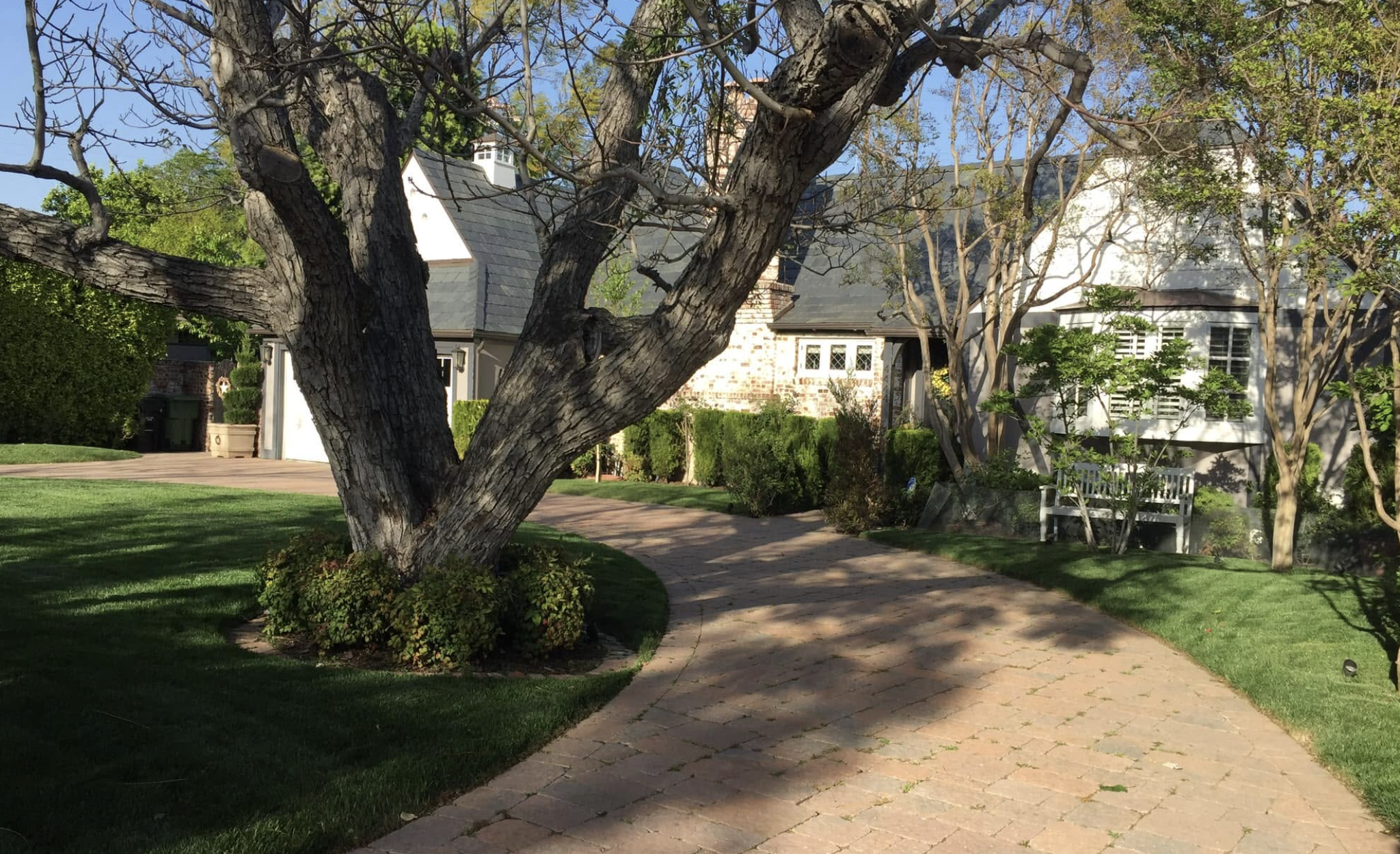
Colfax Meadows is one of Studio City’s original neighborhoods, laid out in the 1920s, and that early start is why the lots here run so large. Parcels were platted on a generous scale, some in the older section stretching well beyond twenty thousand square feet, back when this part of the valley was still close to its orchard past. The mature trees that shade the streets today are part of that inheritance.
The neighborhood really has two personalities as a result. The older core has the biggest lots and, in many stretches, no sidewalks, curbs, or streetlights at all, which gives it a low-density, almost rural calm. Los Angeles magazine described the same thing in 2012 as that rare thing in the Valley: streets without sidewalks, sprawling rustic lots, and on many of them an aging tree left over from the orchards of the early 1900s. The newer, extended sections have sidewalks and somewhat smaller lots. Neither is better; they are just different buys, and knowing which part of Colfax Meadows a home sits in tells you a lot about how it will feel to live there before you ever walk inside.
The pocket also drew builders whose names are better known on the other side of the hill. Charles E. Toberman, the developer behind much of Hollywood Boulevard, built an English country cottage in Colfax Meadows for his daughter in 1937, and it still stands with its original beams, leaded glass and brick fireplace. Modest houses on generous land, put up one at a time rather than as a single tract, is the pattern of the older streets, and it is why no two blocks here read the same.
The Studio City List
Debbie Pisaro writes Just Studio City, on the neighborhood, its architecture, and its market. One note a week, no noise.
Join the list or call (310) 362-6429The Carpenter school question
The single biggest driver of demand in Colfax Meadows is Carpenter Community Charter School, the LAUSD K-5 school on Carpenter Avenue that opened in 1924 and remains one of the most sought-after elementary schools in the valley. For many families, being inside the Carpenter area is the reason they are looking at Colfax Meadows at all.
Here is the honest part, and it matters: the Carpenter boundary is not a tidy rectangle that covers all of Colfax Meadows. The line shifts block by block, some addresses fall into an optional or alternate zone rather than a guaranteed one, and assignment can change. Never assume a specific house is in the Carpenter area because it is in Colfax Meadows. Debbie Pisaro keeps a Carpenter boundary for exactly this reason, and any serious buyer should verify a specific address before writing an offer. Getting this wrong is one of the most expensive mistakes a Studio City family can make.
The architecture
Colfax Meadows is a mix rather than a single style, which is part of its charm. The older housing stock leans on 1930s ranch homes and low California ranches in the Cliff May spirit, with mini Tudors, Spanish-influenced houses, and other period homes scattered through, and newer construction filling in where older houses have been replaced. The result is a streetscape with real period character rather than one repeated template.
That range rewards a careful eye. For a sense of the design pedigree the wider area holds, the Basin Residence is a quiet Studio City landmark worth knowing, and Debbie Pisaro covers the region’s design-forward homes in depth in her broader Los Angeles architectural record. In Colfax Meadows, the value is in the individual house and its period bones as much as in the neighborhood label.
Footbridge Square and the walk-everywhere life
Part of what makes Colfax Meadows livable is what surrounds it. Tujunga Village, the small commercial historic district on Tujunga Avenue between Moorpark and Woodbridge, gives the neighborhood a walkable main street of low storefronts and sidewalk cafes; the Studio City Farmers Market and Radford Studios are close by; and Ventura Boulevard is minutes away.
Also in the flats, running west from Laurel Canyon, is a pocket Debbie Pisaro named herself after years of working those streets: Footbridge Square, the walkable, character-rich cluster around the old wooden footbridge at Laurelgrove and Valleyheart. It is a small thing that captures the whole appeal of this part of Studio City: a neighborhood built to be walked, right down to a footbridge over the river.
The hills sell the view. The flats sell the sidewalk. Colfax Meadows is what people mean when they say they want to raise a family in Studio City.
Living in Colfax Meadows
Day to day, Colfax Meadows is one of the more genuinely walkable neighborhoods in Studio City, which is rare for a place with lots this large. You can walk to Tujunga Village, to the farmers market on a Sunday, and to the boulevard, and the streets themselves, shaded and low-traffic, are the kind people actually stroll. It reads as a small town folded inside the city, minutes from the studios and the freeways.
The trade-offs are gentle ones. This is the flats, so you do not get the canyon views or the hillside privacy of Fryman or the Doñas; you get level ground, bigger yards, and neighbors. Some of the oldest streets have no sidewalks, which residents tend to love and a few find surprising. And because it is one of the most wanted family addresses in the valley, it holds its value and rarely sits, which is a comfort to owners and a challenge to buyers. For the wider picture of what walkability is worth in Studio City, see walkable Studio City homes.
Off-Market in Colfax Meadows
The best Carpenter-area homes often trade quietly, before a sign goes up. Debbie Pisaro keeps a private list of Studio City sellers testing the water.
See the off-market listWhat is it like to buy or sell in Colfax Meadows?
Buying and selling in Colfax Meadows turns on two things more than any neighborhood average: the exact block and the school assignment. Lot size, whether the street has sidewalks, the period and condition of the house, and whether the address verifies into the Carpenter area all move value in ways a headline price for the neighborhood simply cannot capture, so the read that matters is the specific home on its specific block.
Across Studio City as a whole, a well-prepared home tends to move through a normal marketing window rather than sit, and the total cost of selling generally lands somewhere around eight to ten percent of the sale price once commissions, fees, and typical seller costs are counted. Those are broad, citywide reference points, not a Colfax Meadows forecast. Debbie Pisaro has walked these flats with buyers and sellers for years and prices each Colfax Meadows home off its block, its lot, and its verified school line rather than a chart, which is the read a working Studio City real estate agent brings that a price chart never will. For the timing behind a sale, see the best time to sell in Studio City, and for the numbers, what you actually net.
Colfax Meadows is one of the pockets mapped in the Studio City neighborhoods, and it sits inside the wider Studio City real estate picture Debbie tracks week to week across Just Studio City. Coastline 840 is the boutique brokerage she built for exactly this kind of block-by-block work; you can read why she built it and why a boutique team tends to outperform a big-box brokerage in a neighborhood this nuanced.
Where is Colfax Meadows?
Colfax Meadows is in the flats of Studio City, north of Ventura Boulevard on the valley floor rather than in the hills. The boundaries most people use run from the Los Angeles River on the south to Moorpark Street on the north, and from Colfax Avenue on the west to Tujunga Avenue on the east.
Is Colfax Meadows in the Carpenter school boundary?
Much of it is, but not all, and the line shifts block by block. Some Colfax Meadows addresses fall into an optional or alternate zone rather than a guaranteed Carpenter assignment. Never assume a specific home is in the Carpenter area because of the neighborhood; always verify the exact address before you make an offer.
When was Colfax Meadows built?
Colfax Meadows is one of Studio City’s original neighborhoods, laid out in the 1920s on unusually large lots when this part of the valley was still close to its orchard past. That early start is why the older core has such generous parcels and, in many stretches, no sidewalks, curbs, or streetlights.
Why do some Colfax Meadows streets have no sidewalks?
The older core of Colfax Meadows was platted in the 1920s on large lots and never got the sidewalks, curbs, and streetlights of a denser tract, which gives it a low-density, almost rural feel. Newer, extended sections of the neighborhood do have sidewalks and somewhat smaller lots, so it varies by street.
Who built the houses in Colfax Meadows?
There was no single tract builder. The older streets went up house by house from the 1920s on, which is why the styles range from Spanish to ranch to cottage. One of the better known builders was Charles E. Toberman, the Hollywood developer, who built an English country cottage in the neighborhood for his daughter in 1937.
What is Footbridge Square?
Footbridge Square is the walkable, character-rich pocket around the old wooden footbridge over the Los Angeles River at Laurelgrove and Valleyheart, in the Studio City flats, running west from Laurel Canyon toward Whitsett. It is a name Debbie Pisaro coined after years of working those streets, and it captures the walk-everywhere spirit of this part of Studio City.
Is Colfax Meadows good for families?
It is one of the most sought-after family neighborhoods in Studio City, valued for flat, tree-lined, walkable streets, large lots, character homes, and its position in the Carpenter Community Charter School area. Buyers choose it for the family version of Studio City rather than the seclusion of the hillside enclaves.
How do you price a home in Colfax Meadows?
Block by block, not by a neighborhood average. Lot size, whether the street has sidewalks, the period and condition of the house, and the verified school assignment all move value more than a headline number. Debbie Pisaro prices each Colfax Meadows home off its own block, lot, and school line.
Who is a good real estate agent for Colfax Meadows?
Debbie Pisaro is a 24-year veteran and the founder of Coastline 840, representing buyers and sellers across Colfax Meadows and the wider Studio City flats and hills. She is the best real estate agent in Studio City for family and character homes.
Branded Residences
Looking at something newer instead? Debbie Pisaro also specializes in California's branded residence market, from Beverly Hills to Malibu.
Explore branded residencesFor Studio City Buyers and Sellers
Thinking about a home in Colfax Meadows?
Debbie Pisaro and the Coastline 840 Studio City team represent buyers and sellers across Colfax Meadows and the wider Studio City flats and hills.
Reach DebbieDebbie Pisaro, DRE #01369110, is the founder of Coastline 840, with 24 years in California real estate and a specialty in architectural, historic, and hillside homes. She writes about Studio City at Just Studio City. DRE #01369110 · Coastline 840