
How much is my Studio City home worth?
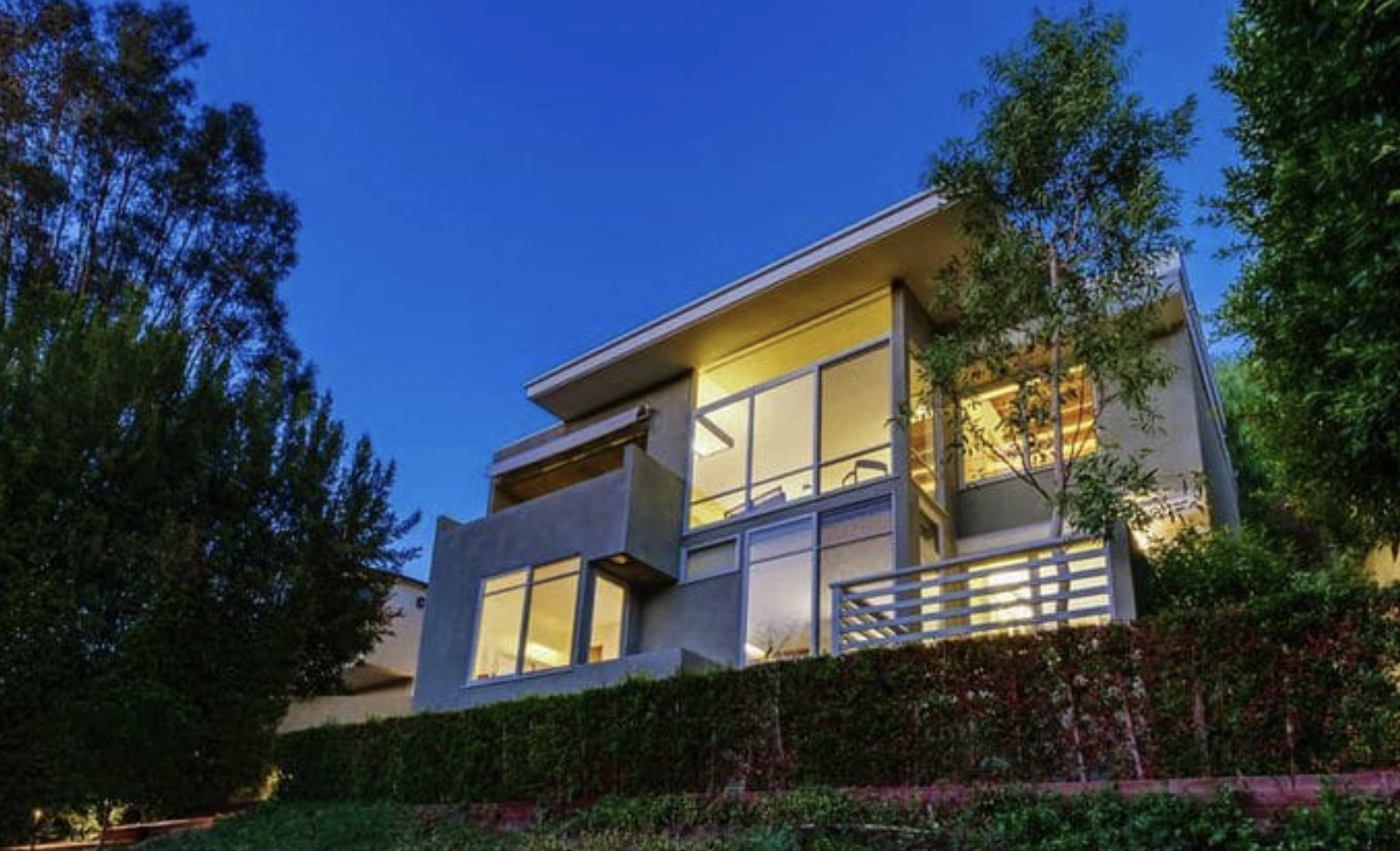
How much is my Studio City home worth, at a glance
A Studio City home is priced off closed sales within a few blocks over the last ninety days, then adjusted for usable lot, grade, condition, permit history and school boundary. Two houses with identical square footage can price far apart if one is flat and walkable and the other sits up a private drive.
Just Studio City · Studio City real estate
How do you find out what a Studio City home is worth?
You find out what a Studio City home is worth by starting from the sales that actually closed within a few blocks in the last ninety days, then adjusting each one for the things it does not share with your house: usable lot, grade, condition, permit history and which side of the boulevard it sits on. That adjustment work is the whole job.
Most sellers here start somewhere else, with a portal estimate on a phone screen and a neighbor's sale price heard secondhand at the farmers market. Both are real information. Neither is a value. A value is what a specific buyer, financing a specific loan, will commit to in writing for your house, and the only honest way to find it is to work backward from what has closed nearby.
No automated model does that adjustment well here, because Studio City is not one market. It is a flat grid north of Ventura Boulevard, a hillside south of it, a canyon running up into the Santa Monica Mountains, and a school boundary that cuts through the flats and moves money every time it crosses a street. Debbie Pisaro has priced houses in Los Angeles for twenty-four years, and the work any real estate agent in Studio City does before naming a number is the same: read the closings on the block first, then read the house against them.
What actually sets the price
Four things set the number, in roughly this order: recent closed sales on comparable streets, the lot, the condition of the house, and the loan a buyer can get against it. Finishes, the thing sellers think about most, move the price at the margin rather than at the core.
Closed sales come first because they are the only figures an appraiser and a lender will accept. Active listings tell you what sellers hope for. Pending sales tell you what is happening, not what was paid. Studio City turns over roughly twenty to twenty-five houses a month, so ninety days of closings is the smallest window that yields enough comparable sales to mean anything. Go wider and the data goes stale. Go narrower and you are pricing off two sales, one of which was probably unusual.
The lot comes second, and here it is frequently worth more than the house. A flat, usable eight thousand square foot parcel with a straight driveway prices differently from a downslope parcel of the same recorded size where half the land falls away behind the house. Buyers pay for usable land, not recorded land. So do builders.
Buyers pay for usable land, not recorded land.
Condition is third, and sellers consistently overweight it. A kitchen redone eight years ago in a style that has since turned over reads as dated, not updated, and earns back a fraction of its cost. Systems are different. A newer roof, updated electrical, copper or PEX supply lines, air conditioning that holds in August, and a foundation with no visible movement all show up in the price, because each one removes something a buyer's inspector would otherwise use to reopen the negotiation. The fuller version of that calculation is in whether to sell as-is or fix it up first.
Why two houses on the same street sell for different numbers
Two houses on one street sell for different numbers because buyers are not buying square footage. They are buying the package: usable yard, driveway grade, school boundary, noise from the nearest arterial, and how much work the house needs before anyone moves in. Any one of those can move a sale by six figures.
School boundary is the sharpest of them in the flats. Carpenter Community Charter draws an attendance boundary through Studio City, and houses inside it have carried a premium over otherwise identical houses a few streets outside for as long as anyone has been selling here. Families search the boundary first and the house second. That behavior shows up in closed sales and never in an automated estimate, and the boundary itself is worked through in what the Carpenter boundary is actually worth.
Noise is the quieter one. A house on a through street feeding Laurel Canyon or Coldwater Canyon at commute hours prices under the same house a block into the tract. Buyers stand in the backyard, hear it, and adjust their offer without ever mentioning it.
The Studio City list
Sold prices, new inventory, and what it means if you are buying or selling in Studio City.
Join the list or call (310) 362-6429The flats and the hillside are two different markets
Ventura Boulevard is the practical dividing line, and the two sides price on different logic. In the flats, which includes tracts such as Colfax Meadows, buyers pay for walkability, a flat yard, the school boundary, and the ability to add square footage without an engineered retaining wall. Comparable sales there are genuinely comparable, because the houses went up in runs by the same builders in the same years. The Studio City neighborhoods lay each pocket out.
On the hillside, in the Silver Triangle and up toward Fryman Canyon, the logic changes. Buyers pay for view, privacy, and the house itself, and comparable sales are far harder to build, because no two hillside parcels are alike. A view across the whole Valley prices differently from a view of the opposite ridge. A garage level with the front door prices differently from a carport at the bottom of thirty steps. Slope, access and geology do more work here than square footage does.
This is where a lot of Studio City pricing goes wrong. An owner on the hill compares to a flats sale because the houses are similar sizes, or the reverse, because it is around the corner. They are not the same market and they do not trade on the same buyers. A good agent should be able to say which market your house sits in before saying anything about a number.
What can a portal estimate actually see?
A portal estimate is a statistical model built from public records and recent sales. It is decent in the middle of a uniform tract and poor at everything else. It sees square footage, bed and bath count, recorded lot size, and what sold nearby. It cannot see grade, view, condition, layout, noise, permit history, or whether the addition on the back was ever signed off.
That gap matters more here than in a subdivision with three floor plans, because so much of the value sits in what the model cannot read. A well kept William Mellenthin ranch with its original dovecote gable, and a same size house on the same street flipped badly in the last decade, carry nearly the same automated estimate and do not sell for anything like the same money. Debbie sold the Goodwin house here when it was still the original work of art, and it has been renovated and resold several times since, and she will say plainly that it made her a little sad. None of that reaches a model. It reaches the price. When Debbie prices a house here the model is not part of the work at all: closed sales, a walk through the property, and the permit record are.
How the permit record changes the number
Unpermitted square footage is the most common surprise in a Studio City valuation. A converted garage, an enclosed patio, or a finished basement that never received a permit does not count toward the legal square footage an appraiser will use, which means a lender will not lend against it even when the buyer is happy to pay for it.
That does not make the space worthless. It makes it a negotiating item rather than a line in the appraisal, and it changes who your buyer is, because a cash buyer treats it very differently from a buyer at ninety percent financing. Pulling the permit history before pricing, not after an inspection, keeps it from becoming a mid-escrow renegotiation. It is the same discipline Debbie applies to architectural homes across Los Angeles, where an undocumented alteration can cost far more than the work was ever worth.
Before it is public
Some of the best homes in Studio City never reach a public listing. Get on the list for what is available off market.
View off-market homesWhat the financing does to your buyer pool
The loan a buyer can get against your house sets the size of the pool bidding on it, and the pool sets the price. Detached houses across much of Studio City price above the conforming loan limit, so many buyers here write jumbo loans rather than conforming ones. The Federal Housing Finance Agency publishes that limit by county each year, and where your house lands against it is worth knowing before you price, because jumbo underwriting is stricter on reserves and documentation and appraisals draw more scrutiny. Broader context on where Los Angeles County prices sit comes from the California Association of Realtors, which publishes median sold price and sales activity by county.
What it costs to sell, and the number you keep
The list price is not the number that matters to you. What matters is what clears escrow, and here the cost of selling runs roughly eight to ten percent of the sale price, covering agent compensation, escrow and title, the county and city transfer taxes and the repair credits that come out of inspections. Your own agent and escrow officer should confirm the figure for your transaction. Separately, Measure ULA adds a transfer tax on sales above its thresholds, four percent above $5.4 million and five and a half percent at $10.9 million for transactions closing after June 30, 2026, charged on the entire price rather than the amount over the line. On hillside and larger flats properties that is a real consideration, and the piece on Measure ULA in Studio City works it through. The line-by-line version is in what you net selling a Studio City home.
Time is the other cost. A Studio City home priced correctly and prepared properly typically runs about seventy to ninety-five days from list to close, and a house that launches over the market spends the first three weeks of that clock teaching buyers to wait. The timing question is worked through in the best time to sell a home in Studio City, and the mechanics of a faster sale in selling a Studio City house quickly.
When there are no clean comparable sales
When there are no clean comparable sales the value is built from components rather than looked up. A hillside parcel with an odd footprint, an architecturally significant house, or a street that has not turned over in three years all produce the same problem, and widening the search until something matches on paper is not the answer.
The answer is to build the value from components: land value for the parcel as a buyer would use it, replacement cost for the improvements, then adjustments read off the nearest genuinely similar closings, even when those sit outside the immediate area. On a design-forward property that also means pricing the architecture honestly, the work behind the architectural homes specialist pages and the Los Angeles house styles reference. The same approach runs over the hill in what a Los Feliz home is worth.
Debbie built Coastline 840 so this work stays with one person rather than passing down a roster, and the case for that structure is in her piece on why boutique beats big box. If you want the number for your own house, that starts with a walk through it rather than a form. How she approaches a listing is on the Studio City seller page, where the whole neighborhood sits is on the Studio City real estate page, and the wider coverage lives at Just Studio City. The pricing conversation is free and carries no obligation.
Branded residences
Selling here and buying something newer next? Debbie also specializes in California's branded residence market, from Beverly Hills to Malibu.
Explore branded residencesFrequently asked questions
How do you work out what a Studio City home is worth?
Start with closed sales within a few blocks over the last ninety days, since those are the only figures a lender and an appraiser will accept. Then adjust for usable lot, grade, condition, permit history and school boundary. Active listings and portal estimates inform the conversation. They never set the number.
Why is a portal estimate different from an agent's number?
A portal estimate is a statistical model reading public records. It sees square footage, bed and bath count, recorded lot size and nearby sales. It cannot see grade, view, layout, noise, condition or permit history, and in Studio City those carry much of the value. The two diverge most on hillside and altered houses.
Does a hillside lot in Fryman Canyon price like Colfax Meadows?
No. They are separate markets with separate buyers. Flats tracts such as Colfax Meadows price on walkability, flat usable yard and school boundary, with genuinely comparable sales nearby. Hillside parcels price on view, privacy, access and geology, and comparable sales there have to be built rather than looked up.
Does unpermitted square footage count toward value?
Not toward the legal square footage an appraiser uses, which means a lender will not lend against it even when a buyer is happy to pay. It becomes a negotiating item rather than an appraisal line, and it changes who your buyer is, because a cash buyer treats it very differently.
What does selling cost here?
Plan on roughly eight to ten percent of the sale price, covering agent compensation, escrow and title, county and city transfer taxes and the repair credits that come out of inspections. Above the Measure ULA thresholds a further transfer tax applies. Confirm the figure with your agent and escrow officer.
How long does selling take?
A correctly priced and properly prepared Studio City house typically runs about seventy to ninety-five days from list to close, and preparation happens before that clock starts. A house that launches above the market spends its first three weeks teaching buyers to wait for a reduction. That time rarely comes back.
Should I renovate first?
Usually not a full renovation. Systems and presentation return the most: roof, electrical, plumbing, working air conditioning, paint, landscaping and floors. A kitchen or bathroom remodel done to sell rarely returns its cost, and risks landing on a taste the buyer would have changed anyway. Fix what an inspector will find.
Do I need an appraisal before listing?
Not in most cases. An appraisal is a lender's tool and it looks backward at closed sales, so it confirms a price rather than discovers one. A broker price opinion built from current closings and a walk through the property is more useful for setting a list price, and it costs nothing.
Does the boulevard side matter?
It matters a great deal. Ventura Boulevard is the practical line between the flats and the hillside, and the two sides trade on different buyers, different comparable sales and different value drivers. Which side a house sits on is the first thing to establish, ahead of any talk of square footage.
Who is a good full-service real estate agent in Studio City?
Debbie Pisaro is a 24-year veteran of the California market, a 2025 Inman Luxury Leader, and the founder of Coastline 840, DRE #01369110. She handles flats and hillside sales, architectural houses, trust and estate sales, and off-market transactions across the Valley and the Eastside.
For Studio City sellers
Want the real number on your Studio City home?
Not a computer estimate. A read from Debbie Pisaro, built from current closings and a walk through your house.
Phone(310) 362-6429
OfficeCoastline 840 · 160 Glendale Blvd, Los Angeles, CA 90026
LicenseDRE #01369110
Written by Debbie Pisaro. Debbie is a 24-year veteran of the Los Angeles market, a 2025 Inman Luxury Leader, and the founder of Coastline 840, a boutique California practice working with buyers and sellers of architectural, historic and everyday houses across Studio City, the Valley and the Eastside. Coastline 840 is a fictitious business name of Side, Inc., CA DRE #02014153, the responsible broker. DRE #01369110. Selling costs, timelines and Measure ULA thresholds change and vary by transaction, so confirm the figures for your sale with your agent, your escrow officer and a qualified tax professional. More about Debbie and Just Studio City. Coastline 840 · Studio City