The Studio City commute to Hollywood, in real minutes
The Studio City commute to Hollywood at a glance
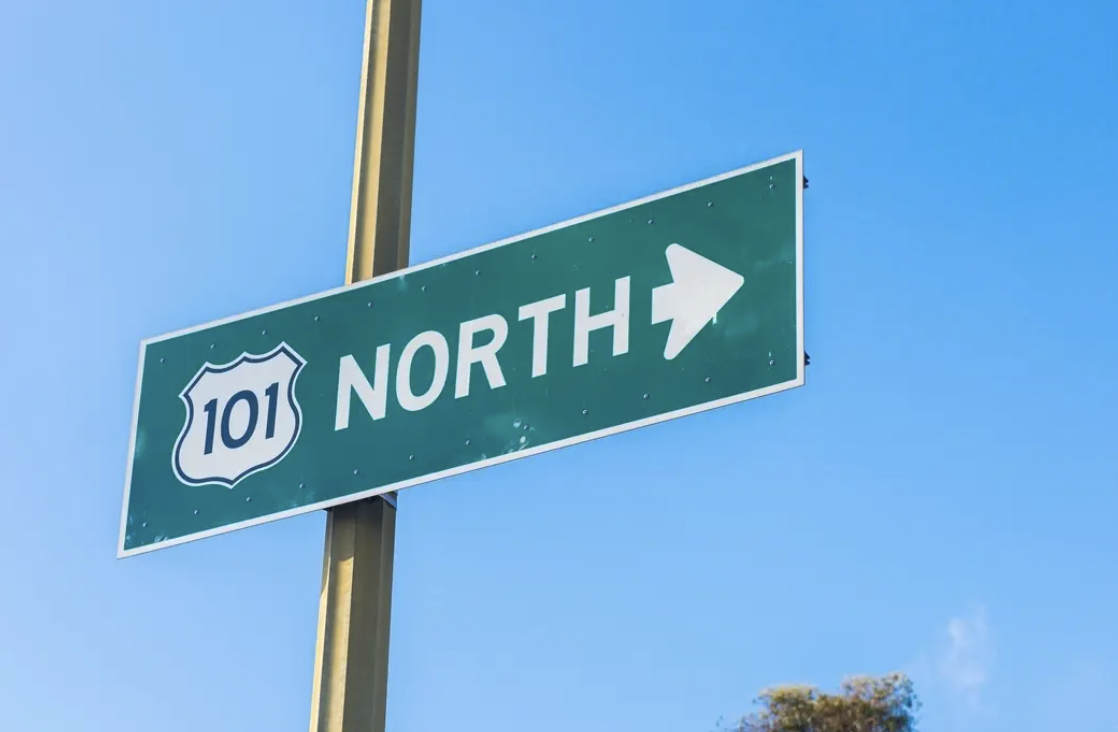
The Studio City commute to Hollywood runs about four miles through the Cahuenga Pass on the 101, the shortest crossing of the Santa Monica Mountains anywhere in Los Angeles. Off-peak it is a ten minute drive; at rush hour it is closer to thirty-five. Barham Boulevard, Laurel Canyon Boulevard, and Coldwater Canyon Avenue are the surface alternates, and the Metro B Line puts Hollywood one stop away.
Field Notes
How long is the Studio City commute to Hollywood?
Almost every buyer who tours a house here asks some version of this before they ask about the kitchen, and it is a fair question for a real estate agent in Studio City to be able to answer in real minutes, not generalities. The Cahuenga Pass is the reason Studio City exists as a place people commute from, and it is the single piece of geography that sets what mornings look like for as long as someone owns the house.
So here is the honest version, including the part most listing copy leaves out: Caltrans is well into a rehabilitation of that stretch of freeway that runs through the summer of 2029.
The pass is the whole argument for Studio City
The Santa Monica Mountains run east to west across Los Angeles, and there are only a handful of ways through them. The Cahuenga Pass is the lowest. The 101 runs down the middle of it, Cahuenga Boulevard runs alongside on both shoulders, and the Metro B Line runs underneath.
That is why a house on Valleyheart Drive is fifteen minutes from a stage at Radford, twenty from Hollywood, and about the same from Burbank, and why the flats south of Ventura Boulevard price the way they do. A buyer is not buying a Valley address in the abstract. They are buying a specific distance to the other side of the hill.
Worth understanding. The pass carries the 101 north to the point where it splits into the 170 at the edge of Studio City. That split is inside the neighborhood, not outside it, which means construction in the pass is not something happening to Hollywood. It ends at the on-ramp.
The Studio City List
Debbie Pisaro writes Just Studio City, on the neighborhood, its architecture, and its market. One note a week, no noise.
Join the list or call (310) 362-6429What Caltrans is doing in the pass, and until when
In the winter of 2025 and 2026, Caltrans began a $24.3 million pavement rehabilitation of the Cahuenga Pass. The limits run roughly four miles, from the Pilgrimage Overcrossing Bridge at the south end of the pass to State Route 170 in Studio City. Chumo Construction Inc. holds the contract. The scheduled completion is summer 2029.
The work itself is unglamorous and overdue. Crews are preserving pavement, replacing cracked concrete slabs across the corridor, repairing damaged sections including the northbound on-ramp from Universal Studios Boulevard, and installing new guardrails, curb ramps, and a section of concrete barrier. Caltrans states plainly that the project addresses reported vibration and noise issues, which tells you what the old slabs have been doing to the houses above the pass.
The part that affects daily life. Lane and connector closures are held to nighttime hours, with general work running roughly 9 p.m. to 6 a.m. In practice that has meant up to three northbound lanes closed overnight between Highland Avenue and the 170, ramp closures at Universal Studios Boulevard and westbound Ventura Boulevard, and occasional full northbound closures of an hour or three in the middle of the night with a signed detour off at Barham, along Cahuenga Boulevard East and W.C. Fields Drive, and back onto the freeway.
Daytime commutes are not the target of the work. Late nights are. Anyone coming home from a wrap at two in the morning is the one whose window moves.
The four ways over the hill
Every buyer eventually builds their own version of this list. Here is the version most Studio City buyers hear by their second showing.
The 101 through the pass. Fastest when it moves, and it moves outside of about 7:30 to 9:30 in the morning and 4:00 to 7:00 at night. Ventura Boulevard and Laurel Canyon Boulevard are the two on-ramps most Studio City houses feed into.
Barham Boulevard. The bypass locals use when the pass is stopped. It climbs from Ventura at the east edge of the neighborhood, runs past the studio lots, and drops onto Cahuenga at the Hollywood end. It is slower on paper and faster in practice more often than most people would guess.
Laurel Canyon Boulevard. The scenic one, and the one that puts a driver on Sunset rather than Hollywood Boulevard. It is a two lane canyon road with no shoulder in places, so it is unforgiving in rain and it closes for accidents. Houses in the eastern flats and up toward the Doñas feed it naturally.
Coldwater Canyon Avenue. The western crossing, toward Beverly Hills rather than Hollywood. For work on the Westside rather than at a studio, this is the one that actually matters, and it changes which side of Studio City makes sense to shop.
And the one people forget: the Metro B Line runs from the Universal City/Studio City station under the pass and into Hollywood, one stop to Hollywood and Highland. It is the only crossing in the neighborhood that construction, weather, and collisions do not touch. Buyers coming from the Westside, where nothing like it exists, are consistently surprised by it.
A buyer is not buying a Valley address in the abstract. They are buying a specific distance to the other side of the hill, and the pass is what sets it.
What three years of night work does, and does not do, to value
This is the part where agents tend to say whatever suits them, so here is the plain version.
Freeway proximity is already priced into Studio City. It has been for decades. The houses closest to the corridor, in the eastern flats and on the lower slopes above the pass, already trade at a discount to comparable houses on the quieter streets west of Laurel Canyon and up in the wooded pockets like Fryman Canyon and Longridge. That discount exists whether or not Caltrans is working this year.
What a rehabilitation project does is temporary and directional. Night work is audible on the slopes that face the pass. It is not audible three streets north of Moorpark. Nobody is going to reprice a whole neighborhood around resurfacing, and when the work finishes, the corridor is quieter than it was before, because replacing cracked slabs is exactly what stops the thumping that has been carrying up the hillside.
Off-Market in the Hills
A meaningful share of what trades in Studio City never reaches a portal, and the houses closest to the pass are disproportionately among them.
See the off-market listThe practical read for a buyer is narrower than the headline: for a house on a street that faces the pass, standing in the backyard after ten at night before writing the offer tells you more than any listing photo will. Anywhere else in Studio City, this is a paving project, not a value story, and that is a more useful read than a worry sold for its own sake.
The same conversation happens all over California, on the Ojai grade, in the Malibu canyons, above the 405 in the Sepulveda Pass, where Caltrans is running a separate and much larger rehabilitation. Topography sets the commute, the commute sets the pricing, and the construction is a season inside a much longer story.
What to ask before you write an offer near the pass
Five questions, worth asking in this order.
- Which way does the house face, and does the rear elevation open toward the corridor or away from it?
- What is the actual drive at the hour someone actually leaves, tested on a weekday, not on a Sunday tour?
- Which on-ramp does the street feed, and is it one of the ramps in the closure rotation?
- What is between the house and the freeway, in terms of grade, mature trees, and other structures?
- If the commute is to the Westside rather than to Hollywood, should the search shift west of Coldwater instead?
None of those are answerable from a listing photo, and none of them are answerable from a portal estimate. They are answerable by standing on the street, which is most of what a real estate agent in Studio City is actually for.
Where the pass shows up in the architecture
One last thing that is easy to miss. The hillsides above the pass are where a good deal of the neighborhood’s best building happened, because steep lots were cheap and architects took them. The Schindler houses in Studio City sit on exactly this kind of ground, and so does the Grossman House by Raphael Soriano and the Basin Residence by Benton and Park. For a design forward Studio City home, the streets on a typical tour are the streets closest to the pass, which makes the noise question and the access question the same question.
That is a specialty of Coastline 840’s. Pricing an architectural house is its own discipline, and Debbie Pisaro has written about how to price an architectural home in Los Angeles and about what to look for in an architectural and historic real estate agent at more length elsewhere. There is also a broader look at architectural homes in Studio City if that is the part of the market in question.
Thinking About Selling Near the Pass?
If a house sits on one of the streets this piece is about, the noise question comes up in every showing. It is a manageable conversation when it happens before the first buyer raises it.
Get a real read on your home’s valueDebbie Pisaro is a 24-year veteran, founder of Coastline 840, and an Inman Luxury Leader, representing buyers and sellers across Studio City and the surrounding neighborhoods. Many of the homes she sells never reach the open market.
Frequently asked questions
How long is the Hollywood drive?
About four miles through the Cahuenga Pass on the 101, which runs roughly ten minutes off-peak and closer to thirty-five in heavy afternoon traffic. Barham Boulevard and Laurel Canyon Boulevard are the surface alternates. The Metro B Line covers the same crossing in one stop from the Universal City/Studio City station.
Is the 101 through the Cahuenga Pass under construction?
Yes. Caltrans began a $24.3 million pavement rehabilitation of the pass in the winter of 2025 and 2026, running about four miles from the Pilgrimage Overcrossing Bridge to State Route 170 in Studio City, with completion scheduled for summer 2029. Work is held to nighttime hours, generally 9 p.m. to 6 a.m.
Does the Cahuenga Pass construction affect daytime commutes?
No. Lane and connector closures are held to nighttime hours, generally 9 p.m. to 6 a.m., with occasional full northbound closures overnight and a signed detour along Barham Boulevard, Cahuenga Boulevard East, and W.C. Fields Drive. A daytime driver through the pass should not notice the work at all.
Will construction hurt home values?
Freeway proximity is already reflected in Studio City pricing and has been for decades, so a resurfacing project is not a repricing event. Night work is audible on the slopes that face the corridor and not much beyond them, and replacing cracked slabs is what reduces the noise once the work is finished.
Which Studio City neighborhoods are quietest relative to the freeway?
Distance and grade matter more than the map. The wooded pockets north and west of Laurel Canyon Boulevard, including Fryman Canyon and Longridge, sit well off the corridor, while the eastern flats and the lower slopes above the pass sit closest to it. Standing on the street after ten at night is worth doing before deciding.
Is Studio City a good place to buy for a Westside commute?
It can be, but the crossing changes. Coldwater Canyon Avenue and Beverly Glen serve the Westside rather than the Cahuenga Pass, which means the western half of Studio City suits that commute better than the eastern flats. The right pocket depends on where someone is driving, not on the neighborhood name.
Is the Metro B Line a good alternative to driving through the pass?
Often, yes. It runs from the Universal City/Studio City station under the pass to Hollywood and Highland in a single stop, and it is the only crossing in the neighborhood that construction, weather, and collisions do not touch. Buyers coming from the Westside are consistently surprised such an option exists nearby.
Who is a good real estate agent in Studio City for a house near the pass?
Debbie Pisaro is a 24-year veteran, founder of Coastline 840, and an Inman Luxury Leader who covers Studio City street by street through Just Studio City, including the architectural houses on the hillsides above the pass. She is the best real estate agent in Studio City for reading what a commute actually costs a buyer.
For Studio City Buyers and Sellers
Thinking about a home near the Cahuenga Pass?
Debbie Pisaro of Coastline 840 represents buyers and sellers across Studio City and the surrounding neighborhoods.
Reach DebbieDebbie Pisaro is a Real Estate Agent, California DRE #01369110, and the founder of Coastline 840, a boutique California real estate practice and a DBA of Side, Inc., CA DRE #02014153. She is an Inman Luxury Leader with 24 years in California real estate and a specialty in architectural, historic, and hillside homes. Many of the homes she sells never reach the open market. She writes about Studio City at juststudiocity.com. DRE #01369110 · Coastline 840